domingo, 8 de enero de 2012

Momificación


en esta foto de sciencemuseum se muestran los utensilios posiblemente utilizados .

siglo 600-200 antes de C

Con respecto a las varillas para reblandecer el cerebro, solian tener unos 40 centímetros de largo y en su extremo estaban acabadas en gancho, aguja o espiral.

figjura1
fuente:the mummy in ancient egypt
Nos centramos ahora en la momificación en el Antiguo Egipto, pero ¿quienes realizaban esas transformaciones en los cadáveres?.
Parece ser que el embalsamador tenía un derecho hereditario que pasaba a sus hijos y así sucesivamente. Esta persona era la responsable de la tumba y era la que realizaba las operaciones en los cadáveres para su conservación, de esta manera, debería de encargarse de todos los cadáveres que fueran enterrados en la tumba.
En los archivos encontrados en Hawara existe un documento en el que unas familias de embalsamadores llegan a un acuerdo sobre la limitación del territorio, en donde tenían derecho a embalsamar cadáveres.
Hay un hecho significativo con respecto a los conceptos de anatomía y es que , debido al respeto que tenían al cuerpo humano, no se realizaban vivisecciones en la época faraónica ni en la griega.
A pesar que en otros temas del foro hemos hablado sobre Heródoto, conviene aquí citar unos capítulos de su segundo libro , titulado Euterpe, en los que hace referencia a la momificación.

LXXXV. Por lo que hace al luto y sepultura, es costumbre que al morir algún sujeto de importancia las mujeres de la familia se emplasten de lodo el rostro y la cabeza. Así desfiguradas y desceñidas, y con los pechos descubiertos, dejando en casa al difunto, van girando por la ciudad con gran llanto y golpes de pecho, acompañándolas en comitiva toda la parentela. Los hombres de la misma familia, quitándose el cíngulo, forman también su coro plañendo y llorando al difunto. Concluidos los clamores, llevan el cadáver al taller del embalsamador.
LXXXVI. Allí tienen oficiales especialmente destinados a ejercer el arte de embalsamar, los cuales, apenas es llevado a su casa algún cadáver, presentan desde luego a los conductores unas figuras de madera, modelos de su arte, las cuales con sus colores remedan al vivo un cadáver embalsamado. La más primorosa de estas figuras, dicen ellos mismos, es la de un sujeto cuyo nombre no me atrevo ni juzgo lícito publicar. Enseñan después otra figura inferior en mérito y menos costosa, y por fin otra tercera más barata y ordinaria, preguntando de qué modo y conforme a qué modelo desean se les adobe el muerto; y después de entrar en ajuste y cerrado el contrato, se retiran los conductores. Entonces, quedando a solas los artesanos en su oficina, ejecutan en esta forma el adobo de primera clase. Empiezan metiendo por las narices del difunto unos hierros encorvados, y después de sacarle con ellos los sesos, introducen allá sus drogas e ingredientes. Abiertos después los ijares con piedra de Etiopía aguda y cortante, sacan por ellos los intestinos, y purgado el vientre, lo lavan con vino de palma y después con aromas molidos, llenándolo luego de finísima mirra, de casia, y de variedad de aromas, de los cuales exceptúan el incienso, y cosen últimamente la abertura[68]. Después de estos preparativos adoban secretamente el cadáver con nitro durante setenta días, único plazo que se concede para guardarle oculto, luego se le faja, bien lavado, con ciertas vendas cortadas de una pieza de finísimo lino, untándole al mismo tiempo con aquella goma de que se sirven comúnmente los egipcios en vez de cola[69]. Vuelven entonces los parientes por el muerto, toman su momia, y la encierran en un nicho o caja de madera, cuya parte exterior tiene la forma y apariencia de un cuerpo humano, y así guardada la depositan en un aposentillo, colocándola en pie y arrimada a la pared. He aquí el modo más exquisito de embalsamar los muertos.
LXXXVII. Otra es la forma con que preparan el cadáver los que, contentos con la medianía, no gustan de tanto lujo y primor en este punto. Sin abrirle las entrañas ni extraerle los intestinos, por medio de unos clísteres llenos de aceite de cedro, se lo introducen por el orificio, hasta llenar el vientre con este licor, cuidando que no se derrame después y que no vuelva a salir. Adóbanle durante los días acostumbrados, y en el último sacan del vientre el aceite antes introducido, cuya fuerza es tanta, que arrastra consigo en su salida tripas, intestinos y entrañas ya líquidas y derretidas. Consumida al mismo tiempo la carne por el nitro de afuera, sólo resta del cadáver la piel y los huesos; y sin cuidarse de más, se restituye la momia a los parientes.
LXXXVIII. El tercer método de adobo, de que suelen echar mano los que tienen menos recursos, se deduce a limpiar las tripas del muerto a fuerza de lavativas, y adobar el cadáver durante los setenta días prefijados, restituyéndole después al que lo trajo para que lo vuelva a su casa.
En su obra Bibliotheca Historica, Diodoro Sículo nos habla también de tres tipos de enterramiento e incluso nos habla de los precios, los cuales varían dependiendo de la clase de embalsamamiento. Este autor indica que son profesionales artesanos quieren realizan las momificaciones, siendo una tradición familiar.
Cuándo reciben el cuerpo del fallecido, un escriba señala la longitud de la incisión que se ha de realizar en el lado izquierdo del cuerpo, dibujando la línea. Después un cortador realiza la incisión, y sobre este cae la tradición de perseguirle y de lanzarle piedras, ya que el cortar el cuerpo de un cadáver es una profanación.
Después de efectuada dicha incisión, uno de los embalsamadores introduce su mano en el la cavidad abierta en el cuerpo y extrae los órganos internos, excepto el corazón y los riñones.
Otro de los embalsamadores tiene la misión de limpiar las vísceras lavándolas con vino de palma y especias.
Posteriormente viene un proceso en el que en primer lugar utilizan aceite de cedro y otras preparaciones y después son utilizadas la canela y otras especies, con el fin de preservar el cuerpo y proporcionarle un olor agradable.
En cualquier caso, el paso primero y lógico al recibir un cadaver era el de proceder a su lavado.

Con respecto a la evisceración: La insicisión que se realizaba en el abdomen del cadáver era lo sufientemente grande para que el embalsamador metiera su mano para extraer los organos. Normalmente las inmcisiones tenian un tamaño como el indicado en la foto, aunque en alguna ocasión la incisión fue más grane, como se observa en la tercera figura.
El tipo de incisión abdominal fue cambiando durante el tiempo.

En la siguiente imagen del libro de Dodson e Ikram, se puede apreciar esta evolución.
En el primer cuerpo se observa la incisión que se realizaba en la época anterior de Tuthmosis III. Es totalmente vertical y realizada en el lado izquierdo ( todas las incisiones se realizaban en el lado izquierdo del cadáver).
En la segunda figura vemos como la incisión es inclinada, formando una diagonal. Este tipode incisión se realizo durante el reinado de Thutmosis III y en los años posteriores a su reinado.
La figura D, presenta un corte singular que va hasta el ombligo. Este tipo de incisión fue el realizado al cuerpo de Tutankhamon.


A trevés de la incisión el embalsamador sacaa las vísceras de la cavidad abdominal y rompe el diafragma para extraer los pulmones, y el corazón también es extraído, siendo el único de los órganos que vuelve a ser colocado después en el cuerpo de la momia.

Debe tenerse en cuenta que el cuerpo suele comenzar a ser tratado por los embalsamadores a los 4 días de su fallecimiento,y a veces posiblemente más... con lo que se puede comprender el estado de descomposición cadavérica con el que se presentaba a los embalsamadores

Fig A
EL cuerpo era vaciado, con respecto a la cavidad craneal ya hablaré en otro post.
Muestro en esta imagen la estructura dinterior del cuerpo humano


Por cirto, quiero hacer una anotación: Heródoto habla de una piedra etíope afilada como instrumento para realizar el corte en el abdomen.
Las visceras eran traradas en una solución de natrón y se introducián en los llamados vasos cánopos.
Las vísceras eran tratadas en una solución de natrón o directamente con natrón y una vez desecadas eran guardadas en los vasos cánopos.
Para extraer el cerebro insertaban un gancho, el cual al perforar entraba en el cerebro e iban removiendo todo su contenido, el cual iba saliendo en forma líquida a través de la rariz

figura B
Aunque se utilice una simple vara, el cerebro se puede sacar en diversas operaciones. Hay que tener en cuenta que la media de peso de un cerebro es de 1 kilo 350 gramos.
Como se observa en la imagen, una vez perforado el hueso etmoidal se va removiendo el cerebro con el gancho.
También, y según nos cuenta Heródoto se introducian drogas para conseguir la disolución de las zonas del cerebro a las que con el gancho no se podía acceder.

Una vez vaciado el cuerpo, según Heródoto , lo lavaban con vino de palma y después lo rellenaban con “finísima mirra, casia y otras especias aromáticas, exceptuando el incienso”.Una vez realizado ese proceso, cosían la incisión y utilizaban el natrón para desecar el cuerpo.
Según Heródoto se sumergía el cuerpo en natrón, pero realmente no se sumergía el cuerpo en ninguna disolución de natrón, se utilizaba el natrón seco para cubrir totalmente al cuerpo y que pudiera deshidratarse.
Para sumergirse un cuerpo en algo, debía estar líquido y por eso Dawson, en el año 1927 emitió su teoría indicando que a los cuerpos los introducían en grandes vasijas de cerámica y que además el cadáver era debía de estar en posición encogida, pero esto no tiene sentido ya que si el cuerpo hubiese estado encogido , difícilmente hubiera podido después estirarse.

El natrón es una mezcla de elementos, y su composición variaba de un lugar a otro.
Los constituyentes son:

Cloruro sódico (NaCl)
sulfato de sodio (Na2SO4)
carbonato de sodio (Na2CO3)
bicarbonato de sodio (NaHCO3)

Su efecto es osmótico, lo que hace es deshidratar los tejidos.
Se utilizaba también en medicina, sobre todo para tratar dolencias de pacientes, utilizandolo de forma externa y para asepsias.

El nombre egipcio del natrón era "Hesmen"

El cadáver debía permanecer en natron 70 dias.
En algunas épocas existía la costumbre de extirpar los ojos del cadáver y sustituirnos insertando ojos artificiales.
Los órganos genitales masculinos normalmente eran colocados en la momia en forma erecta y a veces eran arrancados y momificados aparte.
Durante el Imperio medio, los egipcios intentaron eviscerar los cuerpos a través del recto del cadáver.
Los riñones a veces se dejaban en el interior del cuerpo debido a la dificultad para extraerlos a través de la incisión abdominal
Pasado ese periodo de tiempo, en el que el cuerpo había perdido aproximadamente un 75 por cien de su masa corporal, friccionaban la piel del sujero con aceites, cera, natrón y tambien podían utilizar vino y leche.

el cuerpo era vendado con vendas hechas de lino, que habian cortado de grandes sábanas. Algunas de estas vendas podían medir una media de 400 metros.
Comenzaban a vendar los dedos de las extremidades superiores e inferiores después brazos, piernas, y la cabeza. Una vez vendadas estas partes vendaban el resto del cadáver.
Solían poner entre las vendas amuletos y textos de papiro(pero sobre los amuletos se habla en otros temas del foro).
Las vendas eran fijadas en el cuerpo de la momia con goma arábiga para que las vendas quedaran pegadas.


Figura C

venda con escenas del libro de los muertos. Período ptolemaico

(fuente digitalegypt)


Figura D

proceso de vendado
Sobre curiosidades a la hora de la momificación está el caso del noble Amentefnakht, el cual fue momificado en su propio sarcófago en su tumba de Saqqara.

Cuándo abrieron el sarcófago sellado de este hombre, el doctor Zaky Saad, observó que la momia estaba sobre una capa semi liquida de color marrón. Es decir, lo que habían hecho los embalsamadores es meter el cuerpo en el sarcófago sobre un lecho de natrón y el líquido marrón era el resultado de la licuefacción de la parte trasera del cadáver sobre todo.


    imagen momia Tutankhamon
 imagen momia Tutankhamon
imagen momia Tutankhamon

viernes, 6 de enero de 2012

Peri Em Heru conjuro XIV

Consiste en una fórmula para poder expulsar
La aversión del corazón de un dios contra el osiris N.

"¡ Gloria a ti, Ha-em-at, que presides el desenvolvimiento de los Mistrios! Escucha: un dios que siente aversión hacia mí ha pronunciado palabras hostiles. ¡ Ahoga la mentira, cámbiala inmediatamente, oh señor de la verdad, y aparta de mí una sentencia injusta! ¡ Que este dios se reúna con la v erdad, que este dios me sea favorable, que lo que se opone a mí sea apartado, oh Neky! Oh señor de las ofrendas, grande y poderoso, mira: te he traído las ofrendas de las que vives, ¡ muéstrame favorable, aparta toda la aversión que hay en tu corazón contra mí! "

Este conjuro es importante debido al peligro que tiene el difunto.. un dios puede declarar contra él y eso no es nada bueno además no importa si lo que dice el dios es bueno o malo, lo importante para el difunto aquí es acabar con esa "aversión", expulsarla y así conseguir que el dios no declare contra el difunto.
Ha-em-hat queire decir dios que hace avanzar al tiempo. El difunto pide que se haga callar a ese dios malo que habla del difunto, que deje de hablar mal.
Lo del apelativo "Neky" no se sabe que significa.
Como se puede leer en el conjuro, el difunto intercambia una serie de ofrendas a Osiris a cambio de que cese la aversión del dios malvado

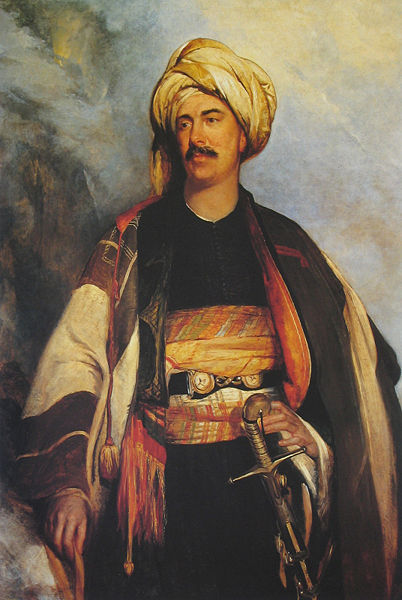
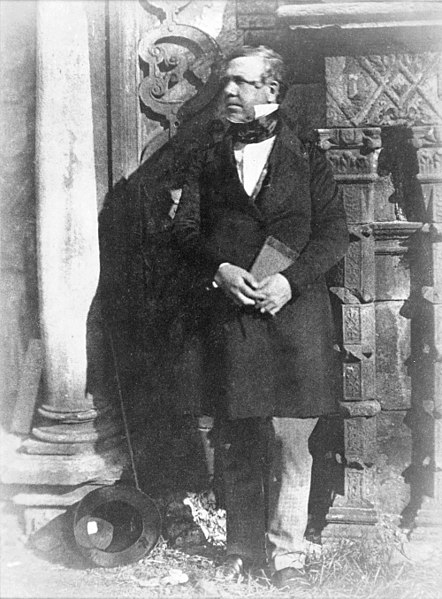
Litografias de Roberts


David Roberts

David Roberts vestido de árabe 1940
D. Roberts en (1844)

David Roberts, en una ilustración de su libro Egypt & Nubia (1842).


jueves, 5 de enero de 2012

Ballana .Culture X


"Beyond the gorge of Abu Simbil and Gebel Adda, the desert cliffs and Pleistocene gravel terraces recede from the vicinity of the river and leave plains on both banks of modern alluvium and upper Paleolithic silt. The scanty vegetation is mainly composed of a few palms and "sunt" trees, which border the river's edge.""We moved forward in extended order noting each possible site, and on November 3rd we came within view of a vast field of tumuli scattered over an area of more than two kilometres. As the tumuli partly obscured by banks of drift sand and decayed vegetation they did not at first appear to be anything other than natural formations, but as we drew nearer we noted that most of them were covered with large schist pebbles and were so regular in shape that their artificial nature was apparent.""On November 7th we received reports of plundering on the east bank of the river at Qustul, and visited the site consequence. We were amazed to discover a further series of tumuli directly opposite those on the west bank, at Ballana, which differed only in their smaller size and absence of pebble covering. Between some of the tumuli at the south end were a few small graves of the X-group period, and it was these graves which had attracted the attention of the plunderers.""Work was started on November 8th with 150 men and boys, and examination of depressions noted on the east side of most of the tumuli revealed the entrances to robbers' passages which had been cut below the ground level on which the mounds were built. The clearing of these passages revealed the fact that they broke into burial chambers of large tombs, which had been constructed beneath the tumuli. Although varying considerably in the size and number of the rooms one feature remained the same in all of them: the entrance of the east side was always found blocked and intact. And it was obvious that the plunderers had realised that beyond this blocking was an open court, or pit, and that the opening of the door would cause an inrush of debris into the tomb"."The few object and pottery left by the plunderers served to show us that these tombs were built for persons of considerable wealth, and were to be dated to the X-group period. The possibility of offerings, etc., left in the open court before the entrance persuaded us to risk a considerable sum of money to get to that entrance by the removal of the tumulus... And on November 10th we commenced the excavation of the Tomb No.2.""Some days were spent in the removal of the tumulus and by the end of a week a large pit was revealed which contained a vaulted chamber of mud brick. This chamber, which was connected with the main rooms of the tomb, had been spared by the plunderers and in it were found, comparatively undisturbed, a large amount of pottery and some leather bags containing dates.""Clearing the debris to the east of this pit we uncovered a ramp which led down from the surface to the entrance of the tomb. By November 23rd the bones of sacrificed horses with their silver trappings and harness were uncovered, and it was then that we realised the true value of the discovery. The excavation of Tomb No.3, which was completed early in the following month, yielded even richer rewards"."At Ballana and Qustul the method of burial and the design of the royal tombs was the same, varying only in the degree of richness and size, according to the importance of the owner. In the construction of the tombs the procedure was as follows: An inclined passage was cut in the hard alluvium leading down to a large pit and a series of brick rooms were constructed in this pit with a small open court into which the inclined passage opened. In some cases each of the brick rooms have been built in separate pits and are connected by short passages tunnelled in the alluvium. The roofing of each room was barrel-vaulted, and in the larger tombs the doors had stone lintels"."Due, no doubt, to the moisture of the ground at the bottom of the pits at Ballana the walls were built with stone foundations." It is evident that the owners of these tombs held to the Ancient Egyptian belief of the material survival after death of both animate and inanimate objects, for they buried with their dead wine and food, furniture, cooking utensils, jewels, weapons and tools and materials to make them, but in place of the ushabtis of the Egyptians they sacrificed their slaves and animals"."One room was usually reserved for the wine jars and drinking cups, and another was devoted to bronze and silver cooking utensils, lamps, jewels, weapons and tools. In the Tomb 80 at Ballana, for example, we found spears and axes together with metal working tools and iron ingots. In the larger tombs a separate chamber was reserved for the burial of the queen, who was undoubtedly sacrificed, with her attendant slaves. But in the smaller tombs the sacrificed queen was placed beside her consort.The king was placed in the chamber nearest the main entrance to the tomb, and it is evident that his installation was the last act before the final closing. His body was laid on a canopied wooden bier, below which were placed bronze and silver vessels for his immediate use. He was dressed in his royal regalia and weapons for his protection were left leaning against the foot of the bier, and at its head lay the sacrificed bodies of a male slave and an ox. An iron folding chair was frequently placed by the side of the bier. The entrance to the tomb was then blocked with bricks and stone and the owner's horses, camels, donkeys and dogs, together with their grooms and possibly soldiers, were then sacrificed in the courtyard and ramp. The animals were buried wearing their harnesses and saddles, the dogs in some cases had collars and leashes. The sacrificed humans met their deaths either by the cutting of the throat or by strangulation, and the animals were pole-axed. Finally the pit and the ramp were filled and a great earthen mound was raised over the tomb; in many cases offerings such as weapons, jewellery, vases, game etc., were buried in the mound. And at Ballana most of the mounds were covered with a layer of large schist pebbles"....
W.B. Emery, "The Royal Tombs of Ballana and Qustul", 1938.

The Osirion

The Osirion at Abydos (Abtu)


by Sir William Flinders Petrieand Margaret Alice Murray1904


The discovery of the Osirion (Osireion or Osiron)In the winter of 1901-2 Mr. St. G. Caulfeild undertook the further examination of the temple of Sety (Seti I) at Abydos (Abtu or Abdju). Our work there resulted in finding the temenos (enclosure) wall, and showing the connection between the planning of that temple and the Royal Tombs of the early kings on the desert behind it. These results, and his careful study of the plan of the temple appeared in the last volume of the research account. But he also made other discoveries which have been followed up during the next winter by Miss Murray with the results here issued in this volume.When Mr. Caulfeild began to excavate, I noticed some thick masses of crude brick, and suggested that they might be mastabas. He cleared along them and found that they formed a continuous wall, which we then identified as the temenos wall of the temple. I observed that parallel with this there was a slight long hollow on the surface, and proposed that he should clear it out. Some time after, on looking at the site I was told the men had found desert a few feet down. This seemed strange, and on looking at it I saw there was only blown sand. So they were told to go deeper. Again, after some time, on going there again, the same story of desert at the bottom was repeated; only this time about fifteen feet down. On examining it I found blown sand. So a third time they were told to go down, and soon after they struck some great blocks of limestone. The final result was that we found the pavement of the hall was forty-one feet under the surface; a depth filled with some Roman rubbish and much blown sand over it.After the excavations by Miss Murray and my wife, we realized that these great stones which we first found were the remains of the doorway to a limestone chamber near the north-west corner of the temenos, which had been entirely carried away for lime burning in Roman times. From the place of this doorway Mr. Caulfeild carried on excavations, continually expecting to come to an end of the entrance passage to the south, and find a door of approach to the subterranean constructions; but after continuing for a couple hundred feet this seemed as far off as ever; and the season being at an end nothing more was done.Miss Murray, then, entered on the work, with the certainty of a long inscribed passage to be cleared and copied, and its terminations to be found. Various attempts were made to settle the beginning of it by surface workings, tracing the filling of made earth which lay over it. And these resulted in showing that it turned at right angles, and led up towards the back doorway of the temple. But it could not be found at it's beginning owing to the immense rubbish heaps thrown out in Mariette's clearing of the temple halls. The work was therefore concentrated on a point where the filling seemed to be undisturbed over the construction, hoping to find there the roof intact, and so enter an unbroken part of the passages.But on descending we found that the filling in had only been left because there was no roof under it there; and the whole of the ancient roofing had been removed, so far as we were able to ascertain, excepting one cracked lintel. Thus nothing short of removing the whole forty feet of stuff over the whole construction can ever clear it. This season only sufficed for the trial working, and clearing the great hall, one chamber, and part of a passage. To do the whole clearance is beyond the slight resources of the Egyptian Research Account; and it is much to be hoped that the Department of Antiquities will undertake to open and maintain this unique hypogeum of Osiris as a part of the great temple which is one of the main attractions of Egypt.It was most fortunate that we had the knowledge of Miss Murray and the artistic copying of Miss Hansard available for such a work, which required long and tedious facsimiles to be prepared, with due attention to the inscriptions. The elaborate study of Osiris which Miss Murray has issued will, it is hoped, serve to clear up and emphasize the various aspects and connections of one of the fundamental deities of the Egyptian worship and beliefs.W. M. F. P. (Sir William Flinders Petrie)


Uncovering the OsirionSection 1. The excavations this year were carried on by Mrs. Petrie and myself (Miss Murray). Mrs Petrie managed the actual excavations, overseeing the men, paying the wages, in short, all the dull and uninteresting, though very necessary, part of the work, whereas I had the more congenial and amusing employment of copying the sculptures. Till the sculptures were sufficiently cleared for me to draw them, I spent my time in the Sety temple, making fac-simile copies of the Coptic graffiti on its walls. Then, when it was possible to draw in the hypogeum, I set to work there, but it was entirely owing to Miss Hansard's kind help that I was able to secure drawings of all the sculpture that we uncovered (with one exception, the sloping passage), before they were silted up. ....... In the previous season Mr. Caulfeild had partially cleared the long passage within the temenos wall; the passage itself had not been laid bare, but the great mass of sand had been removed, leaving a gigantic furrow like a natural ravine. The method of constructing this great hypogeum rendered it comparatively easy to discover that there was building below, though the depth at which it lay made it impossible to clear more than a small portion. The nature of the desert is that after removing from two to four feet of loose wind blown sand, the hard marl, called gebel by the workmen, comes into view. This is so firmly compacted together that it can be cut like rock. The ancient builders took advantage of this fact, and excavated passages and halls with steeply sloping, almost perpendicular, sides. These were lined and roofed with great blocks of stone, and the hollow at the top filled up with sand; the building was then completely hidden from the outside. In our clearance it was only necessary to descend a few feet till the rock-like gebel was exposed, and then to follow down the excavation; and the trial pits that we sunk within the temenos invariably showed that the gebel had been cut perpendicularly to admit of building below.We spent three weeks in hunting for a place where the roof still appeared to remain, and we were puzzled all the time at the number of right-angled turns which this extraordinary passage, as we thought it, appeared to make. These turns, as we now know, must be rock cuttings to hold chambers and halls. Finally we decided on a likely place, where the Roman rubbish, which had filled the part already cleared by Mr. Caulfeild, touched the clean marl filling of the desert. Here it was that we hoped to find the place where the roof was still intact. For days I carried candles and matches in my pocket ready to enter the passage as soon as there was a hole big enough to squeeze through; but they were never required. Throughout this excavation it was always the unexpected that happened; we expected to find a passage, we found chambers and halls; we expected to find it roofed in, the roof had been completely quarried away; we expected to find a tomb, we found a place of worship.Our first deep pit brought us into the South Chamber, which gave us the cartouche of Merenptah, and made us realize that we had found a building which has no known counterpart in Egypt. Then came the discovery of the Great Hall and then of the sloping passage. Here our hopes rose high, for the entrance of the passage had an enormous roofing stone still in position; but we soon found that was the only one that remained, the rest of the roof having suffered the same fate as the other parts of the building. I was able to copy only a very small portion of the inscriptions; for though we cleared the passage to the floor, two days of high winds silted it up to the level of the roof. The whole of the excavation was greatly retarded by heavy falls of sand, the Roman filling being so loose that there were continual rivulets of sand running down the sides; and high wind would bring down half a ton of sand and stones in one fall. To sit in a deep pit under an irregular but continuous fire of small stones, with the chance of a big stone coming down too, is an experience more amusing to look back upon than to endure.At the north end of the north passage we started another excavation, for it was there, beyond the temenos wall, that the big marl heaps stood. It was partly by these heaps that Professor Petrie had deduced the fact that a large building lay below the surface of the desert. They were not natural heaps, yet they were clean marl unmixed with any remains left by man. They were too far from the temples of Sety and Rameses to have been the rubbish removed from their foundations; they were too large to be from the excavations of an ordinary tomb; and as the ancient Egyptian never took unnecessary trouble, it follows that the tip-heap would be as near to the excavation as was allowable. Just inside the temenos wall, at a depth of about thirty feet, we came upon a vaulted passage of mud bricks which extended thirty-five feet northward, and was then apparently broken, for it was filled with sand. The thirty-five feet brought us to the north face outside the temenos wall, where we sank a large pit with this curious result:-The rock-like gebel at a distance of about sixty feet from the wall, was cut in a slope like a staircase from the surface of the desert, sloping down towards the wall. Two mud brick retaining walls had been built across it to retain the sand.At a distance of fifteen feet from the temenos wall we found a square shaft (of which the wall formed one side), lined with mud bricks, some of which bore the cartouche of Sety I. The vaulted passage, which we had entered from the other side, ended in a small arch in the temenos wall, and its floor was paved with blocks of stone. We reached a depth of over thirty feet, and came to undisturbed basal sand on which the walls rested. In the vaulted passage the pavement was lifted but with the same result -- undisturbed basal sand. This was during the last days of the excavations, and there was no time to make further research. As to the meaning of this extraordinary shaft I can offer no explanation, nor can I even hazard a guess. The great marl heaps lead to the belief that there is still a large underground building at that end, though our efforts failed to find it.

Section 2. This hypogeum appears to Professor Petrie to be the place Strabo mentions, usually called Strabo's Well. He describes it as being under the Memnonium; with low vaulted arches formed of a single stone, by which he probably meant that the stone beams went across the halls and chambers in a single span. Whether the entrance is really inside the Temple of Sety, thereby leading him to believe that it was under that building, or whether it was entered from the back door of the temple was not ascertained. As to the spring which he mentions it might well be that already the lower parts of the hypogeum were then below high Nile level, and that what Strabo saw was the remains of the inundation, which he mistook for a natural spring. Section 3. At first sight there was nothing to indicate the real nature of this building, but later two hypotheses presented themselves. The cartouche of Merenptah appeared in every place where it could be inserted, and we therefore had to consider the possibility of it being his tomb. The two points in favour of this hypothesis are that the walls are inscribed with scenes and chapters from the books of Am Duat and of the Dead, and that Merenptah is called the Osiris and "Maat-kheru". Now M. Maspero has pointed out very clearly that the epithet Maat-kheru can be applied to the living equally well as to the dead; one of his most convincing instances being taken from the Temple of Sety at Abydos, where the youthful Rameses II, destined to live to a very great age, is called Maat-Kheru. I have endeavoured to prove (chap v) that the king, in his lifetime as well as in death, was identified with Osiris; this being so, the fact of his being called Osiris does not of itself show that this was his funeral monument. We must remember also that Merenptah had a very fine tomb in the Valley of the Kings; he was hardly likely to make two of such magnificence, one at Thebes and one at Abydos.The other hypothesis was that this was the building for the special worship of Osiris and the celebration of the Mysteries, and this appears to me to be the true explanation, for many reasons. Each reason may not be convincing in itself, but the accumulation of evidence goes to prove the case. There is no tomb even among the Tombs of the Kings that is like it in plan, none having the side chamber leading off the Great Hall. Then, again, no tomb has ever been found attached to a temple; the converse is often the case, I mean a temple attached to a tomb; but this, as far as we can judge, is a kind of extra chapel, a "hidden shrine" as the mythological texts express it, belonging to the temple.It is only to be expected that Osiris, one of the chief deities of Egypt, should have a special place of worship at Abydos, where he was identified with the local god. And that it should be a part of the temple dedicated to the worship of the dead, and which had special chambers set apart for the celebration of the Osirian mysteries is very natural likewise. The building lies immediately in the axis of the temple; a line drawn through the temple and the desert pylon to the Royal Tombs passes through the sloping passage and across the centre of the Great Hall. This is not the result of accident, the temple being older than the hypogeum, but shows that both were dedicated to the same worship.The sculptures in the Great Hall are the Vivification of Osiris by Horus, and the offering of incense by Merenptah; between the two sculptures is inscribed chapter cxlii of the "Book of the Dead", the "Chapter of knowing the Names of Osiris". The other chapters of the "Book of the Dead" inscribed on the walls were pronounced by M. Maspero, when he saw them, to be the "Book of Osiris". The books of "Gates" and of "Am Duat", which are sculpted and painted on the north passage, were said by the ancient Egyptians to have had their origin in the decorations which Horus executed on the walls of the tomb of his father Osiris.Margaret Alice Murray.
(acendingpassage)

Description of the “Doors”


The Book of the Dead, by E. A. Wallis Budge

A Short Description of the “Doors” or Chapters of the Book of the Dead.

All the great papyri of the Book of the Dead begin with a HYMN TO RĀ, who from the period of the IVth dynasty was the“King of the Gods” of Egypt. His cult was finally “established” under the Vth dynasty when the king of Egypt began to call himself in official documents and monuments "Son of the Sun," Sa Rā . This Hymn is supposed to be sung by the deceased, who says:— “Homage to thee, O Rā, at thy beauteous rising. Thou risest, thou risest; thou shinest, thou shinest at the dawn. Thou art King of the Gods, and the Maāti goddesses embrace thee. The Company of the Gods praise thee at sunrise and at sunset. Thou sailest over the heights of heaven and thy heart is glad. Thy Morning Boat meeteth thy Evening Boat with fair winds. Thy father is the Sky-god and thy mother is the Sky-goddess, and thou art Horus of the Eastern and Western skies. ... O thou Only One, O thou Perfect One, O thou who art eternal, who art never weak, whom no mighty one can abase; none hath dominion over the things which appertain to thee. Homage to thee in thy characters of Horus, Tem, and Khepera, thou Great Hawk, who makest man to rejoice by thy beautiful face. When thou risest men and women live. Thou renewest thy youth, and dost set thyself in the place where thou wast yesterday. O Divine Youth, who art self-created, I cannot comprehend thee. Thou art the lord of heaven and earth, and didst create beings celestial and beings terrestrial. Thou art the God One, who camest into being in the beginning of time. Thou didst create the earth, and man, thou didst make the sky and the celestial river Hep; thou didst make the waters and didst give life unto all that therein is. Thou hast knit together the mountains, thou hast made mankind and the beasts of the field to come into being, and hast made the heavens and the earth. The fiend Nak is overthrown, his arms are cut off. O thou Divine Youth, thou heir of everlastingness, self-begotten and self-born, One, Might, of myriad forms and aspects, Prince of An (i.e. , On), Lord of Eternity, Everlasting Ruler, the Company of the Gods rejoice in thee. As thou risest thou growest greater: thy rays are upon all faces. Thou art unknowable, and no tongue can describe thy similitude; thou existest alone. Millions of years have passed over the world, I cannot tell the number of those through which thou hast passed. Thou journeyest through spaces [requiring] millions of years [to pass over] in one little moment of time, and then thou settest and dost make an end of the hours.”

The subject matter of the above extract is treated at greater length in Chapter XV, which contains a long Hymn to Rā at his rising, or Amen-Rā, or Rā united to other solar gods, e.g. , Horus and Khepera, and a short Hymn to Rā at his setting. In the latter the welcome which Rā receives from the dwellers in Amentt (i.e. , the Hidden Place, like the Greek “Hades”) is emphasized thus:—

“All the beautified dead (Aakhu) in the Tuat receive him in the horizon of Amentt. They shout praises of him in his form of Tem (i.e. , the setting sun). Thou didst rise and put on strength, and thou settest, a living being, and thy glories are in Amentt. The gods of Amentt rejoice in thy beauties (or beneficence). The hidden ones worship thee, the aged ones bring thee offerings and protect thee. The Souls of Amentt cry out, and when they meet thy Majesty (Life, Strength, Health be to thee!) they shout ‘Hail! Hail!’ The lords of the mansions of the Tuat stretch out their hands to thee from their abodes, and they cry to thee, and they follow in thy bright train, and the hearts of the lords of the Tuat rejoice when thou sendest thy light into Amentt. Their eyes follow thee, they press forward to see thee, and their hearts rejoice at the sight of thy face. Thou hearkenest to the petitions of those who are in their tombs, thou dispellest their helplessness and drivest away evil from them. Thou givest breath to their nostrils. Thou art greatly feared, thy form is majestic, and very greatly art thou beloved by those who dwell in the Other World.” The Introductory HYMN TO RĀ is followed by a HYMN TO OSIRIS, in which the deceased says:—

“Glory be to thee, O Osiris Un-Nefer, thou great god in Abtu (Abydos), King of Eternity, Lord of Everlastingness, God whose existence is millions of years, eldest son of Nut, begotten by Geb, the Ancestor-Chief, Lord of the Crowns of the South and the North, Lord of the High White Crown. Thou art the Governor of gods and of men and hast received the sceptre, the whip, and the rank of thy Divine Fathers. Let thy heart in Amentt be content, for thy son Horus is seated upon thy throne. Thou art Lord of Tetu (Busiris) and Governor of Abtu (Abydos). Thou makest fertile the Two Lands (i.e ., all Egypt) by [thy] true word before the Lord to the Uttermost Limit.... Thy power is widespread, and great is the terror of thy name ‘Osiris.’ Thou endurest for all eternity in thy name of ‘Un-Nefer’ (i.e. , Beneficent Being). Homage to thee, King of kings, Lord of lords, Governor of governors, who from the womb of the Sky-goddess hast ruled the World and the Under World. Thy limbs are as silver-gold, thy hand is blue like lapis-lazuli, and the space on either side of thee is of the colour of turquoise (or emerald). Thou god An of millions of years, thy body is all-pervading, O dweller in the Land of Holiness, thy face is beautiful ... The gods come before thee bowing low. They hold thee in fear. They withdraw and retreat when they see the awfulness of Rā upon thee; the [thought] of the conquests of thy Majesty is in their hearts. Life is with thee.

“Let me follow thy Majesty as when I was on earth, let my soul be summoned, and let it be found near the Lords of Truth. I have come to the City of God, the region that is eternally old, with my soul (ba ), double (ka ) and spirit-soul (aakhu ), to be a dweller in this land. Its God is the Lord of Truth ... he giveth old age to him that worketh Truth, and honour to his followers, and at the last abundant equipment for the tomb, and burial in the Land of Holiness. I have come unto thee, my hands hold Truth, and there is no falsehood in my heart ... Thou hast set Truth before thee: I know on what thou livest. I have committed no sin in this land, and I have defrauded no man of his possessions.”(Chapter CLXXXIII.)

Chapter I was recited by the priest who accompanied the mummy to the tomb and performed the burial ceremonies there. In it the priest (kher heb ) assumed the character of Thoth and promised the deceased to do for him all that he had done for Osiris in days of old. Chapter IB gave the sāhu , or “spirit-body,” power to enter the Tuat immediately after the burial of the material body, and delivered it from the Nine Worms that lived on the dead. Chapters II–IV are short spells written to give the deceased power to revisit the earth, to join the gods, and to travel about the sky. Chapters V and VI provided for the performance of agricultural labours in the Other World. The text of Chapter VI was cut on figures made of stone, wood, etc. (ushabtiu ), which were placed in the tomb, and when the deceased recited it these figures became alive and did everything he wished. The shabti figure, , took the place of the human funerary sacrifice which was common all over Egypt before the general adoption of the cult of Osiris under the XIIth dynasty. About 700 ushabtiu figures were found in the tomb of Seti I, and many of them are in the British Museum. Chapter VII is a spell to destroy the Great Serpent Āapep, , the Arch-enemy of Horus the Elder, Rā, Osiris, Horus son of Isis, and of every follower of Osiris. Chapters VIII and IX secured a passage for the deceased through the Tuat, and Chapters X and XI gave him power over the enemies he met there. Chapters XII and XIII gave him great freedom of movement in the Kingdom of Osiris. Chapter XIV is a prayer in which Osiris is entreated to put away any feeling of dissatisfaction that he may have for the deceased, who says, “Wash away my sins, Lord of Truth; destroy my transgressions, wickedness and iniquity, O God of Truth. May this god be at peace with me. Destroy the things that are obstacles between us. Give me peace, and remove all dissatisfaction from thy heart in respect of me.”

The holy Ape-gods singing hymns of praise to Rā at sunrise.

The holy Ape-gods singing hymns of praise to Rā at sunrise.

The Jackal-gods and the Hawk-gods singing hymns of praise to Rā at sunset.

The Jackal-gods and the Hawk-gods singing hymns of praise to Rā at sunset.

The Sun-god Rā, in the form of the "Great Cat," sitting by the side of the Persea Tree of Anu, and cutting off the head of Āapep, the god of darkness and evil.

The Sun-god Rā, in the form of the “Great Cat,” sitting by the side of the Persea Tree of Anu, and cutting off the head of Āapep, the god of darkness and evil.

Chapter XV has several forms, and each of them contains Hymns to Rā, which were sung daily in the morning and evening; specimen paragraphs are given above (pp. 33, 34). Chapter XVI is only a vignette that illustrates Chapter XV, Chapter XVII is a very important chapter, for it contains statements of divine doctrine as understood by the priests of Heliopolis. The opening words are, “I am Tem in rising. I am the Only One. I came into being in Nu (the Sky). I am Rā, who rose in primeval time, ruler of what he had made.” Following this comes the question, “Who is this?” and the answer is, “It is Rā who rose in the city of Hensu, in primeval time, crowned as king. He existed on the height of the Dweller in Khemenu (i.e. , Thoth of Hermopolis) before the pillars that support the sky were made.” Chapter XVIII contains the Addresses to Thoth, who is entreated to make the deceased to be declared innocent before the gods of Heliopolis, Busiris, Latopolis, Mendes, Abydos, etc. These addresses formed a very powerful spell which was used by Horus, and when he recited it four times all his enemies were overthrown and cut to pieces. Chapters XIX and XX are variant forms of Chapter XVIII. Chapters XXI–XXIII secured the help of Thoth in “opening the mouth” of the deceased, whereby he obtained the power to breathe and think and drink and eat. Thoth recited spells over the gods whilst Ptah untied the bandages and Shu forced open their mouths with an iron (?) knife. Chapter XXIV gave to the deceased a knowledge of the "words of power" ( , hekau) which were used by the great god Tem-Khepera, and Chapter XXV restored to him his memory. Five chapters, XXVI–XXX, contain prayers and spells whereby the deceased obtained power over his heart and gained absolute possession of it. The most popular prayer is that of Chapter XXXB (see above, p. 4 ) which, according to its rubric, was“found,” i.e. , edited, by Herutataf, the son of the great Cheops, about 3600 B.C. This prayer was still in use in the early years of the Christian Era. In the Papyrus of Nu it is associated with Chapter LXIV, and the earliest form of it was probably in existence under the Ist dynasty.

Chapters XXXI–XLII were written to deliver the deceased from the Great Crocodile Sui, and the Serpents Rerek and Seksek, and the Lynx with its deadly claws, and the Beetle Āpshait, and the terrible Merti snake-goddesses, and a group of three particularly venomous serpents, and Āapep a personification of Set the god of evil, and the Eater of the Ass, and a series of beings who lived by slaughtering the souls of the dead. In Chapter XLII every member of the deceased is put under the protection of, or identified with, a god or goddess, e.g. , the hair with Nu, the face with Aten (i.e. , the solar disk), the eyes with Hathor, and the deceased exclaims triumphantly, “There is no member of my body which is not the member of a god.” Chapter XLIII. A spell to prevent the decapitation of the deceased, who assumes in it the character of Osiris the Lord of Eternity. Chapter XLIV. An ancient and mighty spell, the recital of which prevented the deceased from dying a second time. Chapters XLV and XLVI preserved the mummy of the deceased from decay, and Chapter XLVII prevented the removal of his seat or throne. Chapter L enabled the deceased to avoid the block of execution of the god Shesmu. Chapters LI–LIII provided the deceased with pure food and clean water from the table of the gods; he lived upon what they lived upon, and so became one with them. Chapters LIV–LXII gave the deceased power to obtain cool water from the Celestial Nile and the springs of waters of heaven, and being identified with Shu, the god of light and air, he was enabled to pass over all the earth at will. His life was that of the Egg of the “Great Cackler,” and the goddess Sesheta built a house for him in the Celestial Anu, or Heliopolis.

The soul visiting the mummified body in the tomb. The bird-goddess at the head is Isis, and that at the feet is Nephthys.

The soul visiting the mummified body in the tomb. The bird-goddess at the head is Isis, and that at the feet is Nephthys.

The recital of Chapter LXIII enabled the deceased to avoid drinking boiling water in the Tuat. The water in some of its pools was cool and refreshing to those who were speakers of the truth, but it turned into boiling water and scalded the wicked when they tried to drink of it. Chapter LXIV is an epitome of the whole Book of the Dead, and it formed a “great and divine protection” for the deceased. The text is of a mystical character and suggests that the deceased could, through its recital, either absorb the gods into his being, or become himself absorbed by them. Its rubric orders abstention from meats, fish and women on the part of those who were to recite it. Chapter LXV gave the deceased victory over all his enemies, and Chapters LXVI and LXVII gave him access to the Boat of Rā. Chapters LXVIII–LXX procured him complete freedom of motion in heaven and on earth. Chapter LXXI is a series of addresses to the Seven Spirits who punished the wicked in the Kingdom of Osiris, and Chapter LXXII aided the deceased to be reborn in the Mesqet Chamber. The Mesqet was originally a bull’s skin in which the deceased was wrapped. Chapter LXXIII is the same as Chapter IX. Chapters LXXIV and LXXV secured a passage for the deceased in the Henu Boat of Seker the Death-god, and Chapter LXXVI brought to his help the praying mantis which guided him through the “bush” to the House of Osiris. By the recital of Chapters LXXVII–LXXXVIII, i.e ., the “Chapters of Transformations,” the deceased was enabled to assume at will the forms of (1) the Golden Hawk, (2) the Divine Hawk, (3) theGreat Self-created God, (4) the Light-god or the Robe of Nu, (5) the Pure Lily, (6) the Son of Ptah, (7) the Benu Bird, (8) the Heron, (9) the Soul of Rā, (10) the Swallow, (11) the Sata or Earth-serpent, (12) the Crocodile. Chapter LXXXIX brought the soul (ba ) of the deceased to his body in the Tuat, and Chapter XC preserved him from mutilation and attacks of the god who “cut off heads and slit foreheads.” Chapters XCI and XCII prevented the soul of the deceased from being shut in the tomb. Chapter XCIII is a spell very difficult to understand. Chapters XCIV and XCV provided the deceased with the books of Thoth and the power of this god, and enabled him to take his place as the scribe of Osiris. Chapters XCVI and XCVII also placed him under the protection of Thoth. The recital of Chapter XCVIII provided the deceased with a boat in which to sail over the northern heavens, and a ladder by which to ascend to heaven. Chapters XCIX–CIII gave him the use of the magical boat, the mystic name of each part of which he was obliged to know, and helped him to enter the Boat of Rā and to be with Hathor. The Bebait, or mantis, led him to the great gods (Chapter CIV), and the Uatch amulet from the neck of Rā provided his double (ka ) and his heart-soul (ba ) with offerings (Chapters CV, CVI). Chapters CVII–CIX made him favourably known to the spirits of the East and West, and the gods of the Mountain of Sunrise. In this region lived the terrible Serpent-god Ami-hem-f; he was 30 cubits (50 feet) long. In the East the deceased saw the Morning Star, and the Two Sycamores, from between which the Sun-god appeared daily, and found the entrance to the Sekhet Aaru or Elysian Fields. Chapter CX and its vignette of the Elysian Fields have already been described (see p. 31 ). Chapters CXI and CXII describe how Horus lost the sight of his eye temporarily through looking at Set under the form of a black pig, and Chapter CXIII refers to the legend of the drowning of Horus and the recovery of his body by Sebek the Crocodile-god. Chapter CXIV enabled the deceased to absorb the wisdom of Thoth and his Eight gods. Chapters CXV–CXXII made him lord of the Tuats of Memphis and Heliopolis, and supplied him with food, and Chapter CXXIII enabled him to identify himself with Thoth. Chapters CXXIV and CXXV, which treat of the Judgment, have already been described. Chapter CXXVI contains a prayer to the Four Holy Apes, Chapter CXXVII a hymn to the gods of the “Circles” in the Tuat, and Chapter CXXVIII a hymn to Osiris. Chapters CXXX and CXXXI secured for the deceased the use of the Boats of Sunrise and Sunset, and Chapter CXXXII enabled him to return to earth and visit the house he had lived in. Chapters CXXXIII (or CXXXIX)–CXXXVI resemble in contents Chapter CXXXI. Chapter CXXXVII describes a series of magical ceremonies that were to be performed for the deceased daily in order to make him to become a “living soul for ever.” The formulae are said to have been composed under the IVth dynasty. Chapter CXXXVIII refers to the ceremony of reconstituting Osiris, and Chapters CXL–CXLII deal with the setting up of twelve altars, and the making of offerings to all the gods and to the various forms of Osiris. Chapter CXLIII consists of a series of vignettes, in three of which solar boats are represented.

Chapters CXLIV and CXLVII deal with the Seven Great Halls (Ārit ) of the Kingdom of Osiris. The gate of each Hall was guarded by a porter, a watchman, and a messenger; the first kept the door, the second looked out for the arrival of visitors, and the third took their names to Osiris. No one could enter a Hall without repeating the name of it, of the porter, of the watchman, and of the messenger. According to a late tradition the Gates of the Kingdom of Osiris were twenty-one in number (Chapters CXLV and CXLVI), and each had a magical name, and each was guarded by one or two gods, whose names had to be repeated by the deceased before he could pass. Chapter CXLVIII supplied the deceased with the names of the Seven Cows and their Bull on which the “gods” were supposed to feed. Chapters CXLIX and CL give the names of the Fourteen Aats, or districts, of the Kingdom of Osiris. Chapter *CLI-A and *CLI-B give a picture of the mummy chamber and the magical texts that were necessary for the protection of both the chamber and the mummy in it. Chapter CLII provided a house for the deceased in the Celestial Anu, and Chapter *CLIII-A and *CLIII-B enabled his soul to avoid capture in the net of the snarer of souls. Chapter CLIV is an address to Osiris in which the deceased says, “I shall not decay, nor rot, nor putrefy, nor become worms, nor see corruption. I shall have my being, I shall live, I shall flourish, I shall rise up in peace.” Chapters CLV–CLXVII are spells which were engraved on the amulets , , , , , , etc., giving the deceased the protection of Rā, Osiris, Isis, Horus, and other gods. The remaining Chapters (CLXVIII–CXC) are of a miscellaneous character, and few of them are found in more than one or two papyri of the Book of the Dead. A few contain hymns that are not older than the XVIIIth dynasty, and one is an extract from the text on the Pyramid of Unas (lines 379–399). The most interesting is, perhaps, Chapter CLXXV, which describes the Tuat as airless, waterless, and lightless. In this chapter the deceased is assured of immortality in the words, “Thou shalt live for millions of millions of years, a life of millions of years.”

E. A. Wallis Budge.